
West Virginia Resident Lookup Across Public Records
A West Virginia resident’s records are spread across offices because each office answers a different question. The West Virginia property system connects an owner to a parcel; voter status reflects a current registration entry; court indexes locate cases; vital indexes point to life events; and business or license files show public affiliations. A useful West Virginia search records the county, date, and field that produced each result. That lets a researcher compare independent details instead of treating a matching name as a confirmed identity.
| Record | What it can confirm | Custodian or portal | Access |
|---|---|---|---|
| Assessment or parcel | Owner, parcel, situs and possibly mailing address | West Virginia Real Estate Assessment or county assessor | Free online; West Virginia county handles corrections |
| Voter status | Registration status, party, districts, polling place | West Virginia Secretary of State lookup or County Clerk | Free three-field check; bulk files have rules and fees |
| Circuit case | Party, case number, docket, public documents | West Virginia WVPASS and Circuit Clerk | Free account; public documents from 1999; downloads cost a small fee |
| Magistrate case | Name or case lead, filing, charge, disposition | West Virginia MCRSearch and magistrate clerk | Free index, up to 30 records; documents from clerk |
| Vital index | Birth, death, marriage, or divorce event clue | West Virginia Vital Research Records and Vital Registration | Historical index or image; certified-copy access varies |
| Business or license | Entity, agent, officer, license type or status | West Virginia Secretary of State business search and licensing pages | Free search; result completeness is not guaranteed |
| Probate or estate | Fiduciary, heirs, estate timing, filed addresses | West Virginia County Clerk, Circuit Clerk, Archives | Online coverage varies; clerk or records request may be needed |
Start with the West Virginia record closest to the question. If you know a voter’s date of birth, the status tool can confirm whether an entry is current. If you know a parcel, the West Virginia property viewer can show the assessed owner and map details. If the goal is to confirm a court event, use the West Virginia court’s own index and note its coverage limits. A historical family search may begin with West Virginia directories or vital indexes instead of a current address source.
Each result has a boundary: an owner may live elsewhere, a West Virginia voter page is not a street roster, and a court listing is not a complete history. A West Virginia same-name match needs a second field such as county, date, address, case role, parcel, or relative before it belongs in a personal timeline.
West Virginia Resident Lookup: Verify the Parcel
For an address question, use West Virginia’s property search as a parcel finder, not as an occupant list. The West Virginia Real Estate Assessment site has county, district, full parcel ID, owner, street name, map, parcel, sub-parcel, property-class, tax-class, and land-use fields. Its West Virginia search modes include Basic, Appraisal/Sales, Advanced, and Prior Ownership. A broad query can return 1,000 results, so narrow it by county or street and use the CSV option only when a focused West Virginia result set is useful.
The West Virginia Property Viewer provides a map-based second view. Its E-911 address search expects a street address, city, and state and does not match rural routes or post-office boxes. The viewer also supports county-selected parcel attributes, owner-name partials, geometry, and coordinates. Address data can be incomplete, and the detailed West Virginia parcel panel may differ from the single owner displayed in a result row.
- Search the West Virginia county assessment record by a known owner name, street, or parcel clue. Note the full parcel ID, situs address, and mailing address separately.
- Open the West Virginia mapped parcel and check the district, legal description, and neighboring map context. A displayed owner is the assessed owner, not proof of who lives there.
- If the question concerns a transfer, search the West Virginia County Clerk deed index for the owner’s purchase as grantee. Compare grantor, recording date, book and page, instrument number, and legal description.
- Use the prior grantor as the next name to search, matching subdivision, lot, acreage, and prior reference each time. Names alone can connect unrelated people or tracts.
- When a West Virginia portal’s county coverage stops, call or visit the clerk, use a public terminal, or ask State Archives staff about county microfilm. Image cutoffs differ by West Virginia county.
West Virginia property data separates the physical or situs address from the mailing address used for owner correspondence. A West Virginia mailing line can point to another county, a business, or a representative. For a focused walk from a known address through parcels and deed references, continue with the West Virginia street directory instructions.
- Docket
- A court’s dated list of filings and actions in a case; it is not the same as the papers themselves.
- Index vs. image
- An index helps locate a record. An image shows a scanned page or document, where one is available.
- Certified copy
- A copy authenticated by the office holding the record. A downloaded public court document is not certified.
West Virginia Resident Lookup in Voter Status
The West Virginia Secretary of State’s public status tool asks for three fields: first name, last name, and date of birth in month/day/year format. A match can show registration status, party, political districts, and polling place. The West Virginia page says its information reflects the most recent county entry and updates nightly; activity from the current day may not appear until the following day. It is an informational status check, not a public address search or a by-street directory.
| First Name | Text field; use with the other required identifying fields. |
|---|---|
| Last Name | Text field; if a spelling variant fails, ask the West Virginia County Clerk. |
| Date of Birth | Enter MM/DD/YYYY to distinguish people with common names. |
| Result | Status, party, districts, and polling place for a matching registration entry. |
A West Virginia purchased voter list is a separate service. Its automatic fields include name, residence address and county, party affiliation, active or inactive status, and registration date. Optional additions may include birthdate, mailing address, precinct, legislative or congressional district, and other requested fields. The West Virginia Secretary of State offers lists by county, municipality, precinct, and other jurisdictions, with published fees and a certification process; it is not a free ZIP or street roster. West Virginia law limits how voter data may be used: W. Va. Code §3-2-30(f) bars commercial or charitable solicitation and advertising and the resale or reproduction of purchased lists for resale. Social Security numbers, driver’s-license or state-ID numbers, telephone numbers, and email addresses are not released in the public file. A person whose West Virginia record is incorrect should contact the County Clerk rather than infer that an old status page is current.
The West Virginia Secretary of State voter page shows the three fields used for a current registration check and the kinds of details a successful match returns.
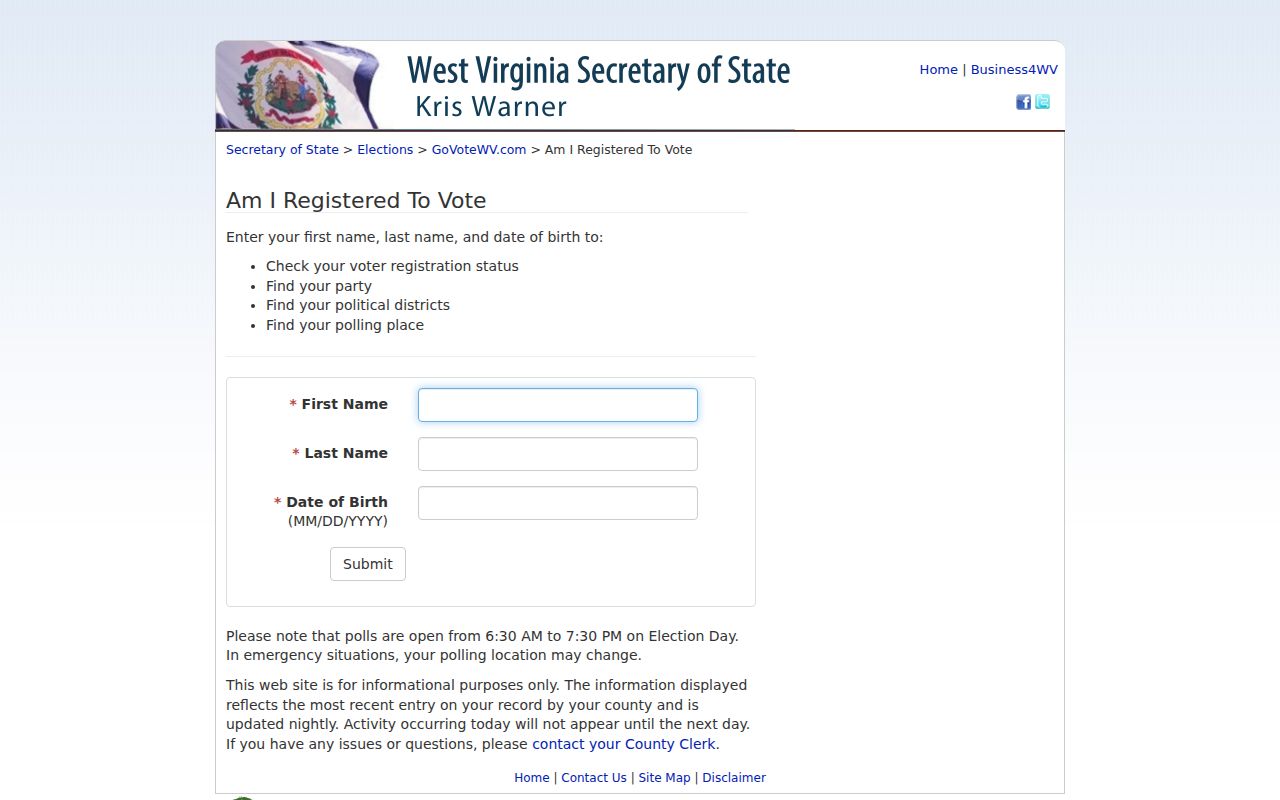
Use those fields to confirm a status lead, then contact the county election office for corrections or a records question.
West Virginia Resident Lookup and Court Records
West Virginia’s WVPASS and MCRSearch are separate routes. WVPASS searches publicly available circuit-court records across West Virginia and reaches public documents from 1999 forward. Registration is free, while West Virginia document downloads carry a small fee. A result can expose a party name, case number, docket entries, and public filings, but downloaded documents are not certified. The West Virginia Circuit Clerk remains the route for certified copies, older files, and restricted material. MCRSearch is West Virginia’s free magistrate index with no account requirement. After the disclaimer gate, users can search a first name, last name, or case number; the system returns up to 30 records. Public results can include names and birthdates, filing date, charge, disposition, and a list of file documents. The documents themselves are not online. Contact the West Virginia magistrate clerk in the county where a case was filed to ask for a copy and the applicable clerk fee.
This difference matters when a West Virginia search for one resident returns no obvious result. MCRSearch is a limited West Virginia lead list, not a full civil or criminal history, and neither court portal exposes sealed or confidential material. Adoption, juvenile, child-abuse and neglect, mental-health, and other protected matters have access limits. Family filings may have confidential sections. A missing public result does not prove that no case exists. The West Virginia Judiciary’s 2026 online dashboard adds near-real-time workload statistics by state, county, and judge, while the CourtOne partnership is intended to unify lower-court case management. Those tools provide West Virginia court-system context, not a name-level substitute for WVPASS or MCRSearch. See the West Virginia Judiciary’s dashboard announcement for that distinction as the systems develop. For identity, compare county, case type, date, party role, and disposition with another record. A party address can be dated or incomplete, and a person named in a case is not necessarily the person with the same name in a property or voter result.
The West Virginia magistrate search page first presents a disclaimer and continue gate before the name or case-number form.
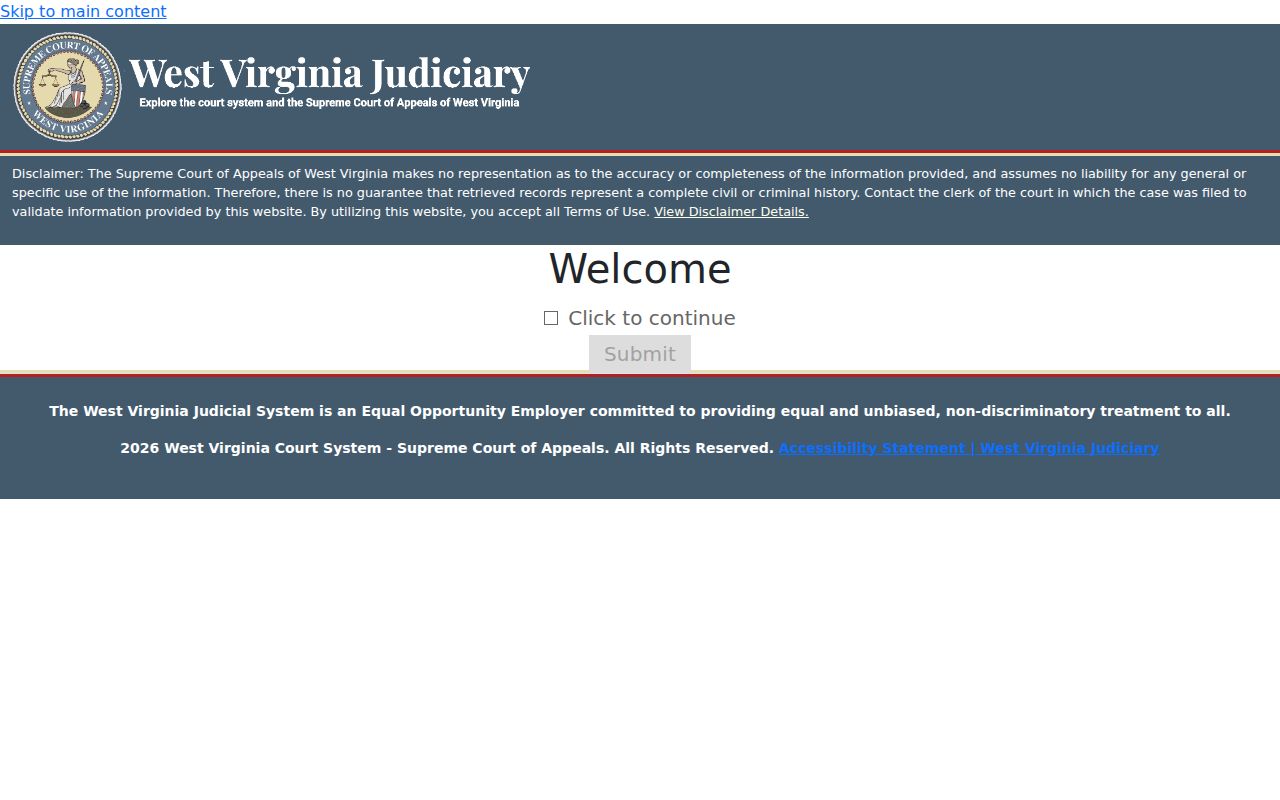
After the gate, use the case clue to identify the correct county and ask the clerk for the underlying file when needed.
West Virginia Resident Lookup: Vital Name Variants
West Virginia Vital Research Records offers historical birth, death, and marriage indexes with scanned images where a county or state run is available. Its form accepts a name, county, year, and plus-or-minus range, with exact, pattern, or similar matching. A practical quirk is easy to miss: the site warns that misspelled names will not be returned. Try a middle initial, maiden name, spelling variant, nearby county, or wider year range before treating an empty result as a dead end.
West Virginia birth and death indexes begin with state registration in 1917, with some delayed births around 1850; marriage indexes begin in 1924 and marriage certificates in 1964. Divorce indexes begin in 1967, while older West Virginia local books and microfilm vary by county. An index or scan points toward an event date and issuing county, but it is not a certified record. Keep the spelling shown in the West Virginia result and check the issuing office’s copy rules before placing it in a family record.
West Virginia Resident Lookup: Copies and Eligibility
Access to West Virginia certified copies depends on the record and applicant. Under W. Va. Code §16-5-27(d), births become public after 100 years; death, fetal-death, marriage, and divorce or annulment records become public after 50 years, subject to protected sections and other law. Before the public period, §16-5-28 generally limits certified copies to the registrant, specified relatives, a legal guardian or authorized representative, or a person able to show a personal or property right. The current West Virginia copy fee is $12, with event-specific ID and payment requirements. The West Virginia historical search page lets a researcher filter by name, county, year, and match mode before deciding whether an official copy request is appropriate.
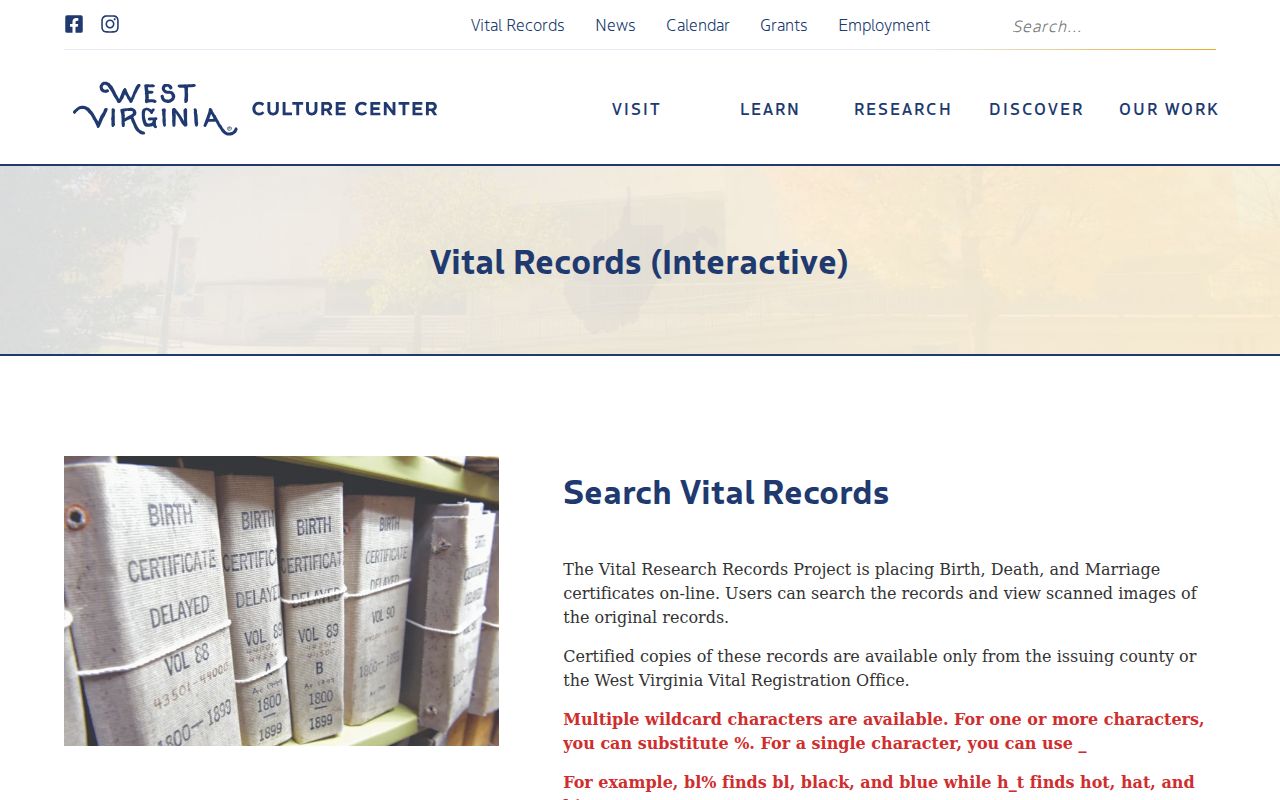
Use a West Virginia result to identify the record and custodian, then check eligibility with Vital Registration or the issuing county before paying for a certified copy. For an eligible copy, West Virginia accepts in-person and mail requests and lists an online VitalChek route with separate vendor charges; county clerks may handle marriage-license questions, local records, and amendments. Check event-specific ID and relationship-proof requirements rather than assuming an index entry grants access. The West Virginia Vital Registration page lays out the current counter, mail, online, fee, and identification routes.
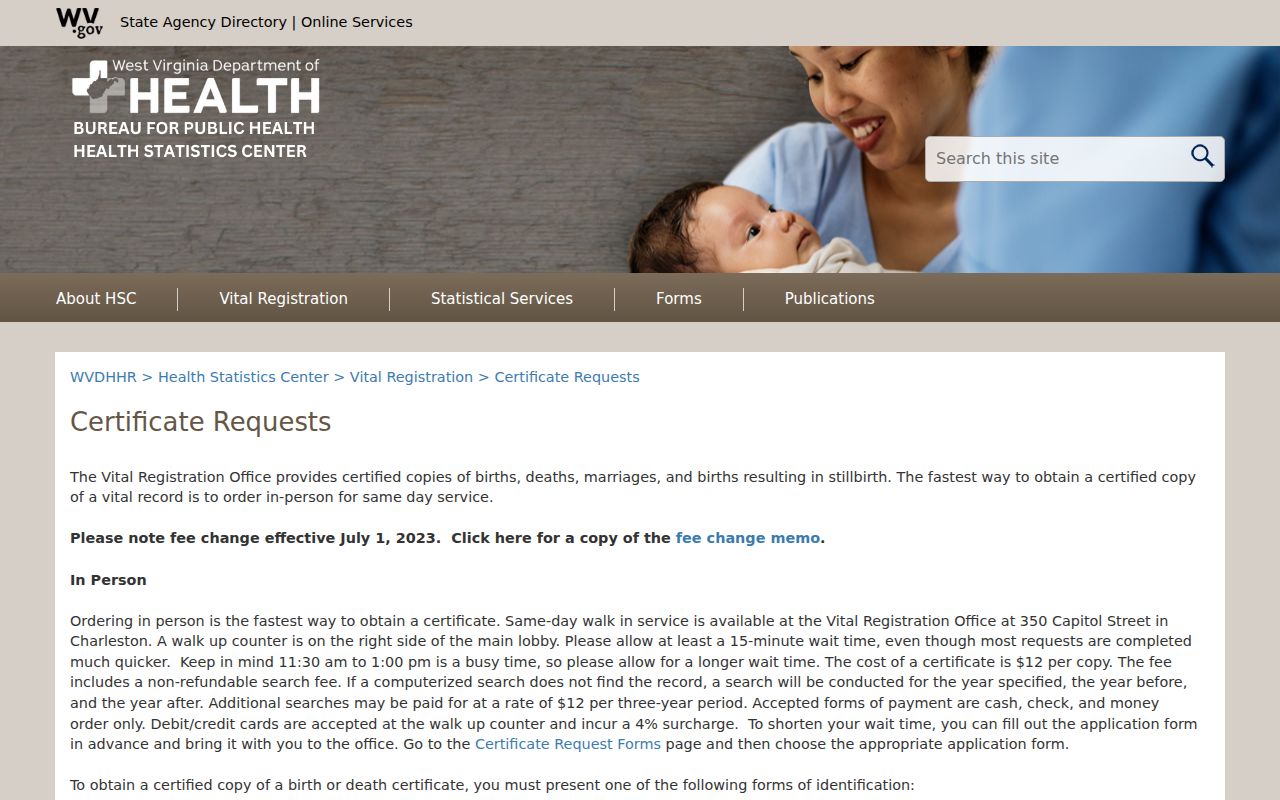
Order through the state or issuing county only after the event, record number, applicant eligibility, and required documents are clear.
West Virginia Resident Lookup Through Business Records
Business and professional searches help distinguish public affiliations, not private home addresses. The Secretary of State’s business-organization search accepts an organization name or an Agent/Officer/Name search and recognizes the percent sign as a wildcard. Results can identify an entity, agent or officer, status, address, and filings; a registered office or business mailing address does not prove where the person lives today.
The licensing search can look across first name, last name, business name, city, state abbreviation, licensee ID, license type, status, and county. Some professional boards maintain their own verification or discipline pages, so use the linked board source for the credential in question. Record the check date because the portal’s notices warn that results may not be complete or correct.
For an heir, switch from a name index to estate records: search the County Clerk or Circuit Clerk for a will, fiduciary, inventory, and notices; use an obituary to add family names and dates, then compare the estate with deeds. If a former classmate is the target, yearbooks, alumni publications, local newspapers, directories, and WVRHC collections may provide stronger community context than a current commercial profile. Check the Treasurer’s free unclaimed-property search for an owner-name and city clue when an estate trail is incomplete. A July 2026 state report said the database held more than $529 million in listings, but a possible match is only an heir lead; claim files and audits have statutory privacy controls. Go directly to the state site rather than paying an unsolicited intermediary. West Virginia has no single official statewide obituary index or one adoption registry contact established in the reviewed sources. For adoption matters, follow the state’s official confidentiality and intermediary rules. Do not use a public index to bypass a sealed file or protected relationship.
The West Virginia city directory collections add dated address, household, and occupation context when a modern affiliation search is not enough. Keep each clue separate until another custodian record links it to the same person.
West Virginia Resident Lookup Privacy Limits
West Virginia’s Address Confidentiality Program helps eligible survivors of domestic violence, sexual assault, stalking, and human trafficking keep a residential address out of routine public use. A participant applies through an approved assistant, receives a substitute-address card, and can use the program address for listed purposes such as mail, voter registration, school enrollment, and a driver’s license or ID. Certification lasts four years, and first-class mail is forwarded without charge within five business days. The governing provisions are W. Va. Code §48-28A and 153 CSR 37.
Do not treat a substitute address as a mismatch to solve. Public records can also have sealed, expunged, juvenile, adoption, mental-health, and protected-victim limits. DMV address data is restricted by federal law; it does not belong in a general resident search. Property and recorded instruments can be public, but statutory redactions and protected officials’ procedures still matter.
If an official entry is wrong, send the exact name, record number, date, requested correction, and supporting document to the office responsible for that record. Parcel errors go to the county assessor; recorded instruments to the County Clerk; voter errors to the County Clerk or Elections Division; vital amendments to Vital Registration or the issuing county. Include the portal and inspection date so staff can locate the same version.
Personal research only. Use public records for lawful personal, historical, or civic research. Do not use a search result to stalk, harass, intimidate, or harm anyone, or to evade a confidentiality rule.
Keep a lookup as a small evidence trail: note the source, county, result fields, date, and what remains uncertain. The custodian’s record controls when an online index and an older document disagree.