
West Virginia City Directory Shelf Map
West Virginia has no single, continuous directory series for every town. The holdings are a patchwork: Charleston has early printed volumes and stronger twentieth-century runs, while local archives and microfilm provide separate stretches for other cities. Use a directory’s title page to note the publisher, edition year, places covered, and abbreviation key before comparing entries. A year missing from a catalog list is a gap in that collection, not evidence that residents left town. The table distinguishes town directories from related address and research sources; “present” means the latest described year at the time of the source review, not a guarantee that a new annual edition has arrived.
| Collection | Years described | Publisher or series | Where held | Access |
|---|---|---|---|---|
| West Virginia State Archives city directories | Charleston: 1874–75 and scattered volumes through 2016; Wheeling begins with 1851 and has later fragments | Publishers vary by edition; check title page | Archives & History Library, Charleston, West Virginia | Onsite reading or written research request; runs have gaps |
| Polk’s Charleston directories | 1908–present; Charleston and neighboring suburbs | R.L. Polk editions | Kanawha County Public Library in Charleston, West Virginia, Main Library, third floor | View in library; no checkout or hold |
| WVRHC city-directory microfilm | Charleston 1906–52, 1954–63, 1964–68, 1969–78, 1978–88; runs for Beckley, Bluefield, Huntington, Parkersburg, and Wheeling | Multiple titles and publishers on microfilm | WVU West Virginia and Regional History Center | Microfilm readers; copies or scans may be requested |
| West Virginia telephone directories | Charleston & vicinity 1917–36 and 1954/55–2016; other city and rural runs vary | Exchange and community editions vary | West Virginia State Archives | Search by exchange or community as well as town |
| West Virginia state gazetteers | 1877–1924, in scattered editions | Publisher varies by edition | West Virginia State Archives and WVRHC | Useful chiefly for businesspeople and civic listings |
State Archives holdings list Charleston editions in selected years from 1874–75 through 2016, but not every year is represented. The WVRHC microfilm run fills some intervals and covers other cities; Polk’s later Charleston collection offers a separate local route. These series overlap without matching exactly, so record the actual volume and edition rather than treating two catalog entries as interchangeable. Start with the Archives’ town-by-town directory list to see which repository is likely to have a year. A West Virginia city directory search works best when tied to a town and narrow period; the statewide collection is a map of holdings, not one searchable list of residents.
The State Archives catalog page provides a useful first stop for the Charleston and outlying-town runs.
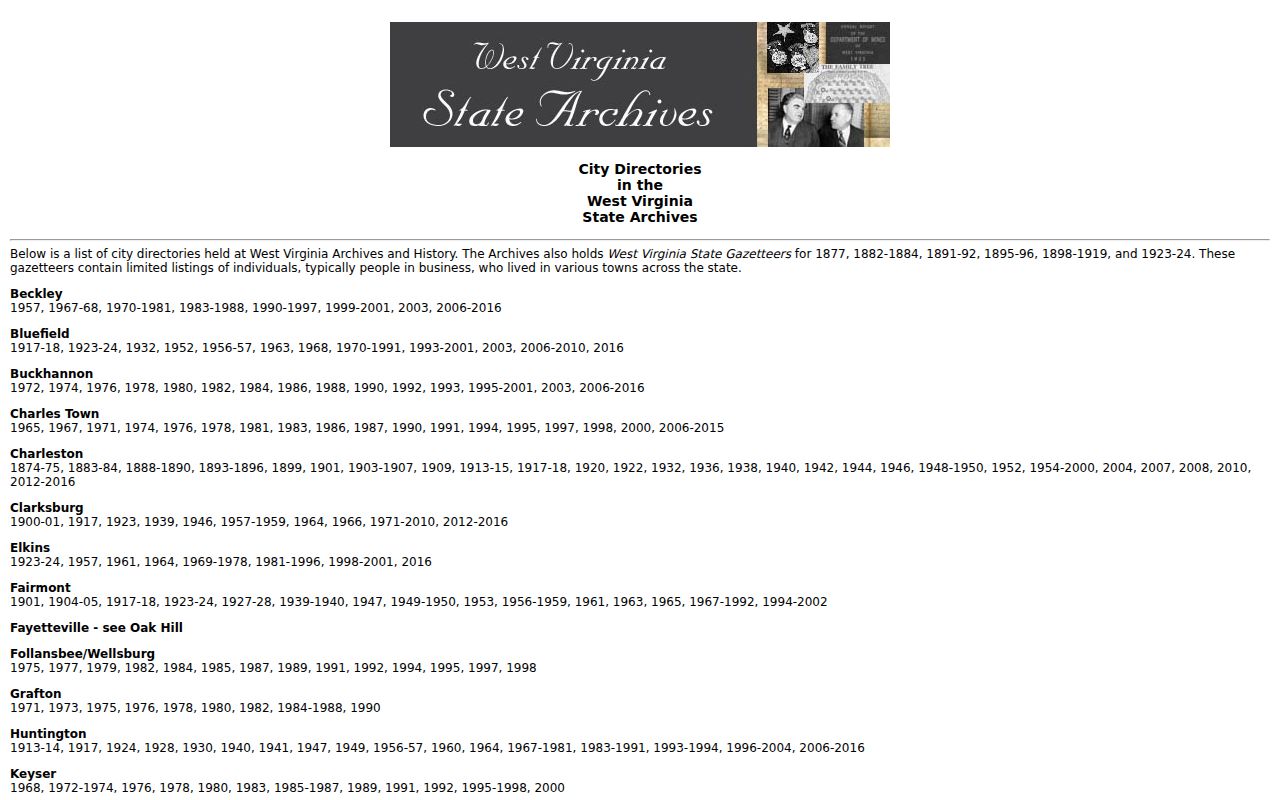
The West Virginia year ranges help identify which shelf or microfilm collection to ask for before planning a visit.
West Virginia City Directory Access at KCPL
In Charleston, West Virginia, Kanawha County Public Library describes the Polk collection as a run covering the city and neighboring suburbs from 1908 to the present. It contains personal and business addresses, which makes it a strong bridge when a West Virginia family story gives a street or occupation but no exact residence year. The collection is kept on the Main Library’s third floor in Charleston, West Virginia. The library states that these West Virginia volumes cannot be checked out or placed on hold, so plan to use them onsite rather than expecting a remote scan or an interlibrary loan.
The West Virginia library’s local-history desk is a practical place to ask whether a particular year has an alphabetic section, street section, or reverse listing. Those formats are not guaranteed for every place or edition. Tell staff the community, surname, possible year span, and whether the lead is a person or address. If the person lived outside Charleston proper, ask about the suburb printed on the cover and the communities included in that edition. A West Virginia directory line is a lead, not a deed: a name beside an address does not establish title, daily presence, or the identity of every person in the home. Compare it with property records or a later directory before assigning the address to a household member.
The West Virginia library’s catalog page describes the years, geographic reach, and in-library access conditions for its Polk shelf.
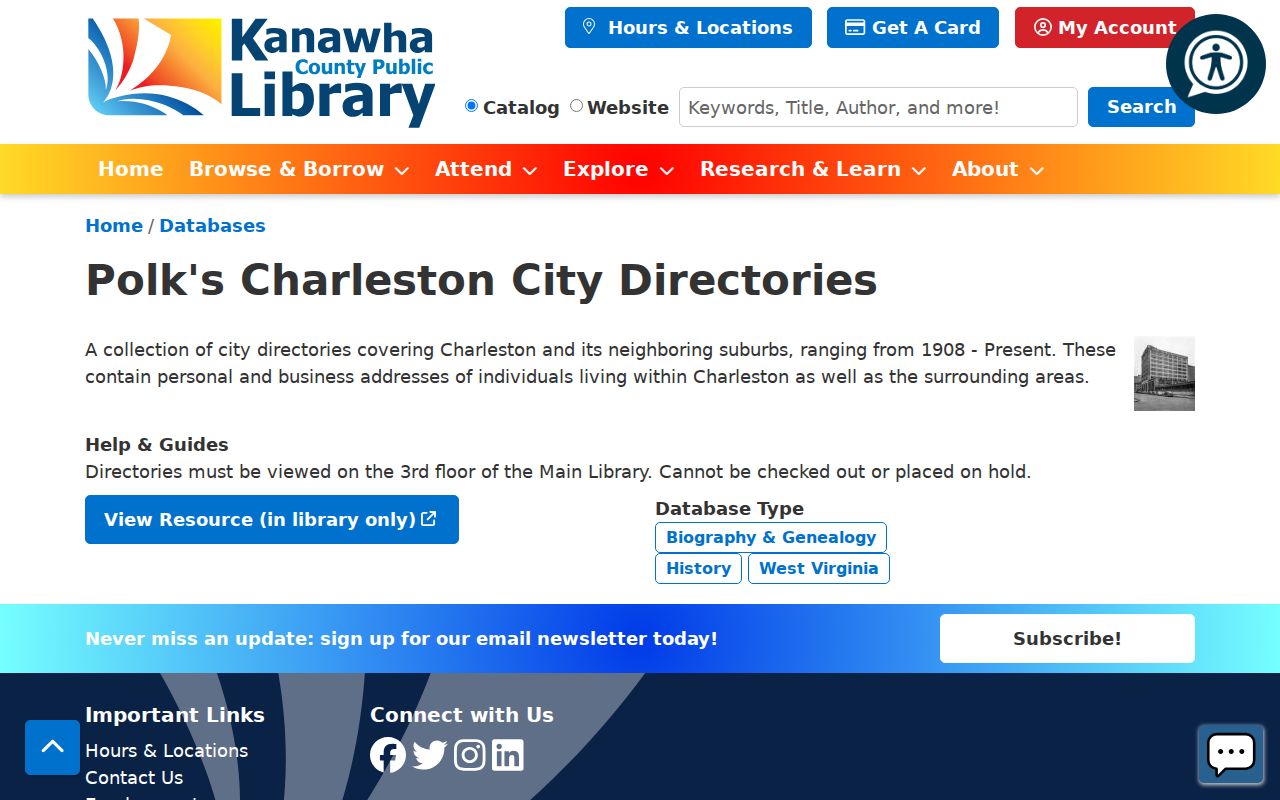
Use the collection notice to confirm the onsite viewing rules, then capture the edition year and page reference while consulting a volume.
West Virginia City Directories Beyond Charleston
WVU’s West Virginia and Regional History Center lists directory microfilm for Charleston, Beckley, Bluefield, Huntington, Parkersburg, and Wheeling. West Virginia coverage is uneven: Beckley runs from 1938 to 1985, Bluefield from 1928 to 1985, Huntington from 1931 to 1988, Parkersburg from 1925 to 1985, and Wheeling from 1930 to 1988. Charleston spans 1906–1952, followed by additional intervals into 1988. That mix makes WVU useful when a West Virginia Archives list has a gap or when the family lived outside the capital.
Ask for the specific West Virginia city, years, and format rather than requesting “all directories.” The microfilm catalog is a finding aid, and the reader or reference desk can help locate the reel and identify whether it is an alphabetic, street, or telephone listing. The WVRHC page also describes a broad West Virginia microfilm collection, so adjacent records may be discoverable even when a particular city-directory year is absent. For towns with thin directory coverage, widen the search to telephone books, gazetteers, newspapers, yearbooks, church histories, and county holdings. The Archives arranges much West Virginia material by county, and pre-statehood residents may appear under Virginia jurisdictions that later became West Virginia. Use the county and place as they existed during the record’s date.
WVU’s microfilm catalog shows the regional breadth of the collection and its many unrelated county and community records.
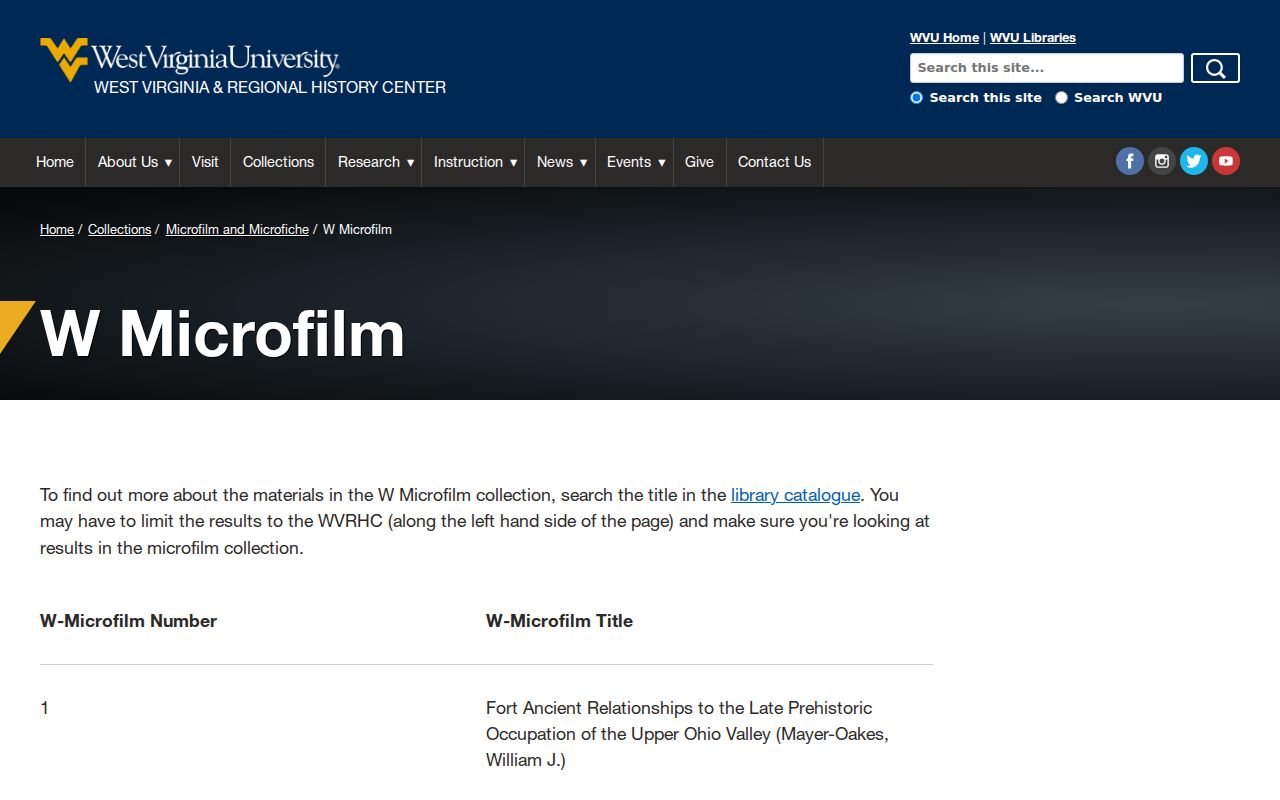
Confirm the listed title and year span before requesting a reel; catalog coverage may differ from the nearby State Archives or library run.
Reading a West Virginia Directory Entry
A West Virginia directory is arranged to help readers move from an alphabetic name listing to an address or business reference. West Virginia collections do not use a uniform entry format, and editions can change their abbreviations or included sections. WVRHC describes its West Virginia directories as containing residents’ names, residences, and occupation or business details. Before interpreting a short mark, photograph or transcribe the edition’s own key and introductory pages.
The West Virginia inventory below separates common information a researcher may encounter from marks that must be checked in the actual book. The 1878 Sholes volume available through Google Books exposes a contents and index view, but the research review did not find a stable full-page resident image for a defensible field-by-field transcription. Do not assign an expansion to an abbreviation based on another West Virginia city or publisher.
| Person or household name | The alphabetic listing may place a spouse or other household notation beside the named resident; preserve the printed wording. |
|---|---|
| Residence | The address links a person to a place in that edition, not proof of ownership or continuous occupancy. |
| Occupation or business | WVRHC describes occupational or business connections in its listings; wording and detail vary by year. |
| Spouse notation | Parentheses or a spouse reference may occur in older volumes; check that publisher’s conventions before expanding it. |
| Owner / renter mark | Only record this when the particular volume defines the symbol. The inspected Sholes sample did not expose a reliable resident page. |
| Page and edition | Copy the city, publisher, edition year, page, and section title so another reader can return to the same line. |
- Criss-cross directory
- A reverse section organized by address or street rather than by a person’s surname. Availability varies by city and year.
- Householder index
- An index pointing from a listed name to the page or entry where the person appears; headings differ among publishers.
- Abbreviation key
- The edition’s explanation of shortened words and symbols. Find it before reading occupation, relationship, or residency marks.
West Virginia City Directory’s 1878 Civic Lists
The 1878 Sholes Charleston volume has a useful West Virginia quirk: its contents extend well beyond household names. The visible index names a Board of Firemasters, Board of Health, church and temperance societies, shipping commissioners, the State Judiciary, and other civic and business groups. A researcher tracing a West Virginia family can use those headings to identify the institutions and occupations that surrounded a person’s listed address, while keeping organizational membership separate from proof of residence.
The digitized Google Books view of the 1878 Sholes directory exposes the contents and index but not a stable full-page resident entry for reliable field-by-field transcription. It is a discovery aid, not a substitute for reading the original West Virginia edition. Confirm the page, spelling, and abbreviation key in a West Virginia library or archival copy before quoting an entry as evidence.
West Virginia Telephone Directories Reach Rural Communities
In West Virginia, telephone books can fill a different gap than city directories. The West Virginia State Archives lists Charleston and vicinity volumes from 1917–36 and again from 1954/55 through 2016, alongside runs for dozens of smaller communities and exchanges. Huntington has a fragmented series. Some West Virginia regional books name communities beyond the city on the cover, so a rural family may be indexed under a nearby exchange rather than the town or county now used in an address.
Search the State Archives telephone-directory inventory by exchange, nearby community, and year. In the Northern Panhandle, a regional run can reach across West Virginia, Ohio, and Pennsylvania place names; Bluefield-area books may include communities in Virginia. A missing surname in a city directory can therefore reflect the series’ geographic label instead of a move.
West Virginia gazetteers add a wider but thinner layer. The State Archives and WVRHC hold editions in scattered years from 1877 through 1924, with more emphasis on businesspeople and civic listings than complete household addresses. Pair a West Virginia gazetteer name with a local newspaper, directory, or county source before treating a business listing as a residence.
Trace Family History with West Virginia City Directories
For a West Virginia family, choose a place and a known event before opening books. West Virginia residents may be listed under a city, a smaller community, a telephone exchange, or an older county jurisdiction. Once the West Virginia geography is settled, track each appearance as a dated claim and use other records to test a change of address, occupation, or household relationship.
- Write down the target county, town, district, and approximate year. For an older record, check whether the place was then part of Virginia or a different county.
- Search the nearest directory year before the event. Copy the exact name, any spouse or household notation, occupation, address, and printed owner or occupancy symbol if the key defines one.
- Check one or two West Virginia editions on each side of the date. A book may be compiled before publication, and some years were never issued or did not survive.
- Use the street or reverse section, if that volume has one, to compare the address and nearby entries. Ask library staff for a “street,” “reverse,” or “criss-cross” section rather than assuming one exists.
- Pair the directory snapshot with the nearest released federal census. Census releases follow a 72-year rule; the Archives and WVRHC provide maps, guides, microfilm, or database routes for historical comparisons.
- Confirm a transition with deeds or assessment records, voter status, a vital index, newspaper notice, probate, or cemetery record. Choose a source that answers the specific question rather than repeating the directory entry.
A person disappearing from a directory may have moved, died, changed a name, been omitted by the publisher, or landed outside that edition’s coverage. The next source should distinguish among those possibilities. If a household appears at the same address but under a different name, check whether the entry records a spouse, an adult child, a business, or a new owner before inferring a family change.
West Virginia volumes can also help reconnect place names that shifted with roads, annexations, or postal routes. Keep the original street spelling beside any modern equivalent; then use a plat, deed, or official addressing record for the present-day location. The modern address process belongs in the West Virginia street directory guide, while older West Virginia directories supply the historical name and date to carry into that search.
West Virginia Archives Explain Missing Directory Years
A gap in a West Virginia shelf should send a researcher to a different record type, not to a conclusion that the person vanished. Charleston’s Sanborn map collection at WVU contains maps from 1884 through 1933, including 281 digitized TIFF files. The maps can establish a building footprint, street layout, and land use, but they do not name the household. Use a directory for people, a map for the structure, and a deed or parcel record for the land interest. The WVU West Virginia and Regional History Center describes more than 4,000 archives and manuscript collections, nearly 20,000 linear feet, 28 county court archives, and genealogical transcriptions covering all 55 counties. Its finding aids can surface West Virginia family papers, church records, civic organizations, school materials, and court collections that complement a thin directory run; some databases require reading-room or library-licensed access.
West Virginia’s record history is county-specific. Before statehood in 1863, a current West Virginia place may appear in Virginia records. Courthouse fires and other losses affected West Virginia counties differently. Morgan County’s 1844 courthouse fire and Civil War-era losses are one documented reason early birth and death material can be absent there; that story should not be generalized to every West Virginia county or collection. The West Virginia State Archives research-services page requires written requests for staff research and lists a $10 in-state and $20 out-of-state research fee in the reviewed guidance. It also describes West Virginia microfilm and reproduction support. Give the repository a name, county, community, year span, and exact question; confirm that the relevant volume exists before requesting a scan or citation.
The WVRHC holdings page offers a route from a directory search toward court, family, school, church, and community collections when the printed series ends.
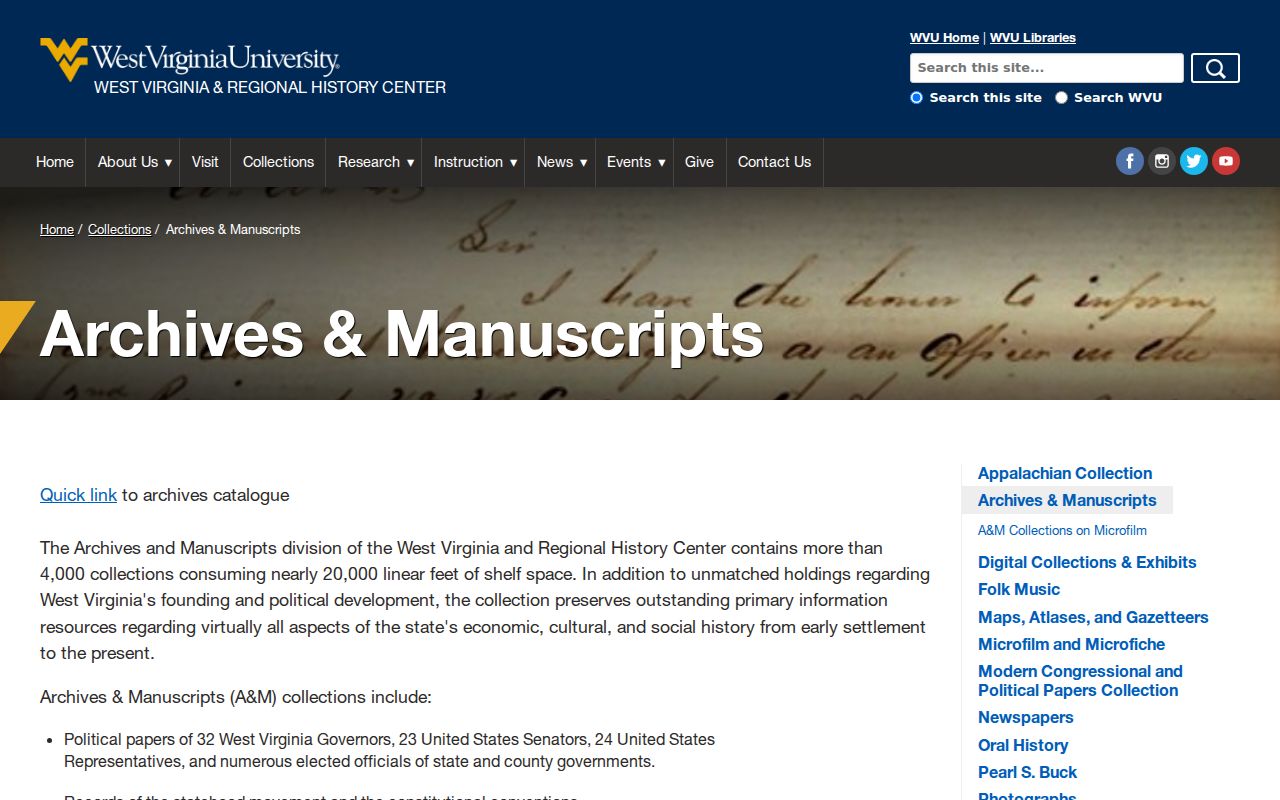
Use the West Virginia collection guide to locate a finding aid, check restrictions, and identify records that can independently confirm a person or place.